

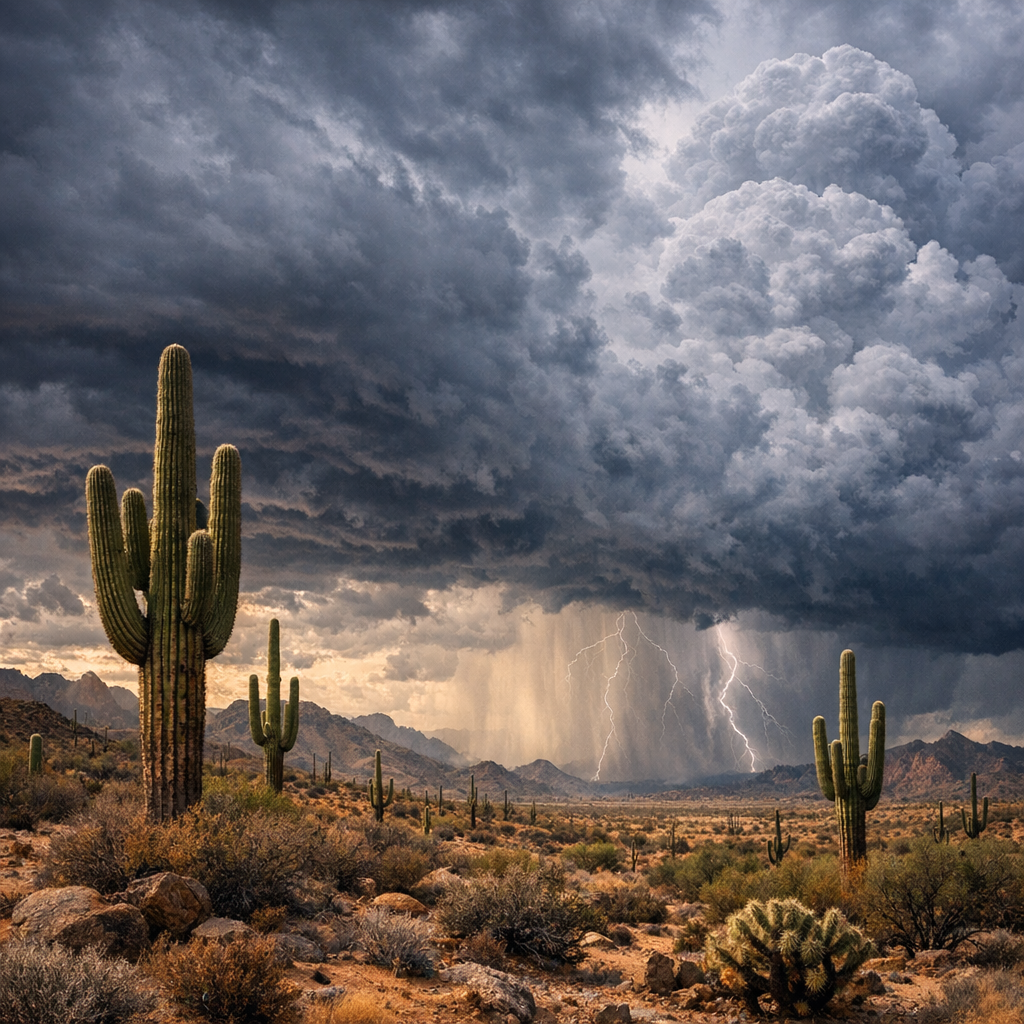
What makes Tucson’s monsoon season so critical
Tucson sits in the heart of a desert climate where annual rainfall averages about a foot: roughly eight inches during summer and early fall’s monsoon storms, and the rest in winter rains. Since 2008, the National Weather Service has recognized monsoon season here as starting June 15 and ending September 30. These seasonal storms bring intense downpours, lightning, dust, sometimes damaging winds—offering both relief from the heat and threats to safety.
Drought trends and risks to our water
Despite the monsoon’s importance, recent years have been marked by drier patterns. Short-term drought has spread across much of Arizona, and long-term deficits continue to build. Even when storms arrive, parched soils can soak up rain before it reaches aquifers or reservoirs. Without regular, substantial rainfall across seasons—both summer and winter—Tucson’s groundwater basins struggle to recharge.
Climate change and shifting storm patterns
Climatologists have observed subtle shifts in Tucson’s monsoon behavior. Storms are tending to occur later, are less frequent, and may become harder to forecast. This means stronger pulse storms with potential for flash flooding, and longer dry breaks in between. Models suggest that temperature increases amplify evaporative demand, drying out soils and vegetation more quickly.
Sustainable strategies—both for water and community resilience
To address these challenges, Tucson is pushing forward with integrated approaches to water management:
- One Water Planning: The “One Water 2100” plan treats all water—including surface, storm, reclaimed, and groundwater—as valuable resources to be managed together for long-term sustainability.
- Water conservation efforts: Programs to reduce outdoor water use, promote drought-tolerant landscaping, expand tree canopy to reduce urban heat island—all help save precious water and lower temperatures.
- Stormwater harvesting and green infrastructure: Capturing runoff in streets, parking lots, and vacant land can slow erosion, filter pollutants, recharge soils, and reduce flood risks.
What you can do as a Tucsonan
Your individual and neighborhood choices matter. Here are actions to consider:
- Install rainwater capture systems—barrels or cisterns.
- Use landscaping that conserves water and supports local ecology.
- Reduce residential outdoor water use—typical in our dry climate.
- Stay informed about dust storms and flash floods: know warning signs and safe responses.
Conclusion
Tucson’s weather and environment are in flux: shifting monsoon timing, worsening drought, and higher temperatures pose real stakes. That said, through proactive planning—city-wide, neighborhood-level, and personal—our community can build resilience so that when storms do come, our region is ready to benefit from them, not simply suffer through them.